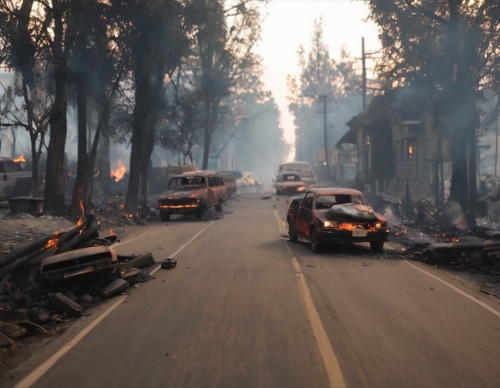
Wildfires can race across the landscape and, in just a few hours, turn whole neighborhoods into charred ruins. To protect as many people as possible, local authorities need clear evacuation routes and shelter plans well before the flames arrive.
That’s why the National Institute of Standards and Technology (NIST) has refreshed its wildfire-preparedness guidelines, drawing on new research and feedback from communities in the field. The revised report—Wildland-Urban Interface Fire Evacuation and Sheltering Considerations: Assessment, Planning, and Execution (ESCAPE)—is now live on the NIST website.
This guidance speaks directly to the roughly 115 million Americans who live in areas where wildfires pose a serious threat. Fires don’t always stay in the backcountry; they can surge into towns, consume homes, and leave only minutes of warning. In those fast-moving moments, traditional evacuation alerts and road closures often come too late, trapping residents before they have a chance to escape.
“This report can save thousands of lives because it offers a science-backed approach to planning for worst-case scenarios,” said lead author Alexander Maranghides, a fire protection engineer at NIST. “We need a rigorous approach because we have seen, time and time again, that these fires are unforgiving.”
For over 120 years, NIST has conducted research on fire safety and fire science, including numerous investigations of fires at the interface between urban and wildland areas. NIST frequently investigates past fires to learn lessons that can help save lives in future emergencies.
In 2023, NIST released the first version of the ESCAPE report, along with a case study on the evacuations during the devastating 2018 Camp Fire, which claimed 85 lives, destroyed more than 18 000 structures and leveled the town of Paradise, California. The 2023 report transformed the lessons learned from that investigation into practical guidelines for emergency managers, first responders and community leaders.
ESCAPE provided communities with the tools to prepare before the flames arrived. It was the first guide of its kind. Over the last two years, 30 California communities quickly integrated these guidelines into their evacuation plans. NIST considered their feedback, along with information from recent fires, to update this new version of ESCAPE.
What’s New in the 2025 ESCAPE Guidance
Three of the main changes to the latest version of ESCAPE concern temporary refuge areas, sudden fires and “decision zones.”
Creating temporary refuge areas in advance
The ESCAPE report introduces “Temporary Fire Refuge Areas” (TFRAs), predefined spaces intended to increase survival odds when evacuation is no longer possible.
During the Camp Fire, many people in Paradise could not evacuate. Traffic was congested and the flames blocked escape routes.
First responders improvised quickly, directing evacuees to open spaces with lower fire intensity, such as empty parking lots, cleared fields, and even the roadway of wide streets. NIST’s investigation found that these improvised decisions saved more than 1 200 people during the disaster.
In the 2025 version of the report, TFRAs are a new category of open spaces to be planned in advance. Pre-planning these refuges allows local authorities to ensure there are enough of them, increase their fire resistance and mark them with clear signs.
The report also describes other emergency alternatives to evacuation, explained in this latest version. While they cannot replace evacuation, these alternatives can increase survival odds for those who cannot safely leave the area.
Planning for no-notice evacuations
The Camp Fire trapped many residents before they received evacuation notices. Similar disasters, like the 2023 Maui wildfires, left people with no time to prepare. The updated ESCAPE report emphasizes the importance of planning for no-notice evacuations, including having multiple evacuation routes (if possible), pre-designating TFRAs and safety zones, and preparing multiple emergency communication methods.
Creating “decision zones” for evacuations
Evacuating for a fire miles away should look very different from evacuating for a fire about to reach the community. At some point, telling everyone to get in their cars and evacuate is more dangerous than guiding them to a nearby TFRA. The evacuation strategy must evolve as the fire approaches, but it is hard to know when to change tactics.
ESCAPE advises communities to map out zones with different risk levels. If a fire moves into a more dangerous zone, responders must make new decisions about the evacuation plan. The latest version of ESCAPE provides greater flexibility in these “decision zones,” allowing more room for situational judgment.
Bringing the science of wildfire evacuations to communities
Now that the report is available, NIST’s Wildland-Urban Interface Fire group is focused on working with local authorities who will need it. The group collaborates with state and local governments to integrate ESCAPE recommendations into official wildfire response plans. To make the report more accessible, the new version includes fact sheets summarizing the most important information.
NIST experts have also created a new interactive online course that guides users through ESCAPE’s core concepts in a simpler way than the lengthy 150-page report. This online tool is available free on the NIST website.
In addition to providing online tools, NIST works with fire departments, urban planners and community leaders to promote educational campaigns, evacuation preparedness drills and targeted activities in fire-prone areas, helping communities become more resilient and responsive when wildfires strike, not just for individual structures but for entire communities.
“Most large buildings have fire evacuation plans,” said Maranghides. “In areas at risk of wildfires, it is equally important to have a community-wide evacuation plan, including how to respond to no-notice events.”
Glossary
- TFRAs (Temporary Fire Refuge Areas): Pre-designated areas where people can seek refuge when evacuation is not possible.
- ESCAPE: NIST’s updated report for planning evacuations during wildfires.
- Decision Zones: Mapped zones with different risk levels, where evacuation strategy changes based on proximity to the fire.